Brainstorming before you start writing
The scariest moment is always just before you start. Once you begin the process of writing the thoughts keep flowing in the mind.
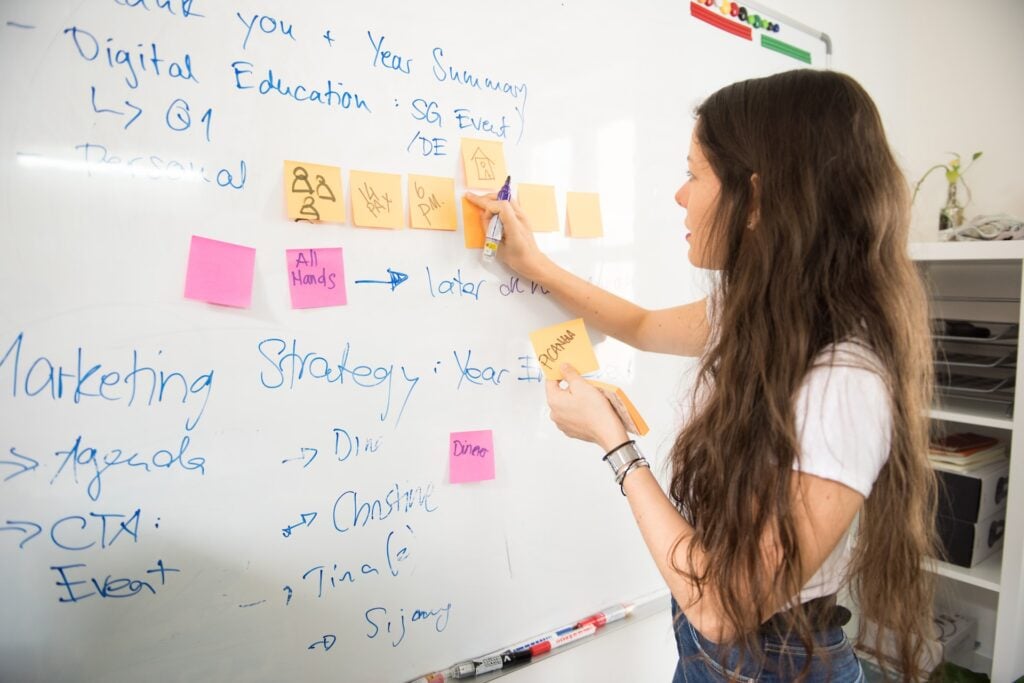
You just have to organize your thoughts in order and also have to decide which thoughts you can include in your paragraph/essay. Brainstorming can help at this stage. Brainstorming helps in deciding the topic of your writing but when the topic is already being given it can be used to list ideas related to the topic. The most important thing to remember for the teachers at this stage is not to limit the thoughts of their students, and let them write anything and everything that comes to their mind when they think about the given topic. I am sure most of the teachers already use some of the techniques which I am going to share here.
Brainstorming in many ways
1). Mind Mapping (Individual)
A very common brainstorming technique is where students write the topic in the centre and then draw lines and write words related to the topic all around it. Aim for individual words only at this stage. To make it more fun and challenging set a time limit, the one who comes up with more words in the said time is the winner. Let students do this in their exercise books.
All your students have some words related to the topic with them. Now, ask students to select words most relevant to the topic. Let’s say select any 5 words that are closely related to the topic.
2). Mind Mapping (Group)
The class now has a limited number of words related to the topic. Now the teacher writes the topic in the centre of the whiteboard and draws small lines and circles around it. Ask students the words they have selected, at this stage if the students give a word that is not relevant to the topic initiate a discussion as a class and ask them why they think it is related to the topic. If they can explain include the word.
You now have a lot of relevant words with you, ask students to make sentences using the words. Instruct them that they can give examples, facts, or stories related to the topic using that word. Make them write on the whiteboard taking turns so that you can rectify their grammar and vocabulary mistakes.
3). Listing
For teaching the descriptions (person, place, activity) listing technique can be used. Initiate discussion and make a list of items that should be included in the paragraph. For example, ask your students if they have to describe a place, and what information they can include in their paragraph then make a list on the whiteboard if you feel that some of the items cannot be a part of the paragraph have a quick discussion to make students understand and rethink.
4). Mind Mapping (Group)
The class now has a limited number of words related to the topic. Now the teacher writes the topic in the centre of the whiteboard and draws small lines and circles around it. Ask students the words they have selected, at this stage if the students give a word that is not relevant to the topic initiate a discussion as a class and ask them why they think it is related to the topic. If they can explain include the word.
You now have a lot of relevant words with you, ask students to make sentences using the words. Instruct them that they can give examples, facts, or stories related to the topic using that word. Make them write on the whiteboard taking turns so that you can rectify their grammar and vocabulary mistakes.
5). Listing
For teaching the descriptions (person, place, activity) listing technique can be used. Initiate discussion and make a list of items that should be included in the paragraph. For example, ask your students if they have to describe a place, and what information they can include in their paragraph then make a list on the whiteboard if you feel that some of the items cannot be a part of the paragraph have a quick discussion to make students understand and rethink.
6). WH-questions
Another way of brainstorming ideas is to ask ‘wh’ questions but this technique cannot be used with all topics. It is a good technique to use when you are teaching narrative writing.
7). Flipped Brainstorming
This technique can be used with advanced-level students for essay writing. The teacher can share videos or materials related to different essay topics with students. Students watch the videos and read materials before the class and when in class, the teacher handover a piece of paper to a student who writes 3 ideas related to the topic on it and passes it on to another student and so on until all the students finish sharing their ideas. Instead of writing on paper, the student can share the idea orally and the teacher writes the idea on the whiteboard.
Students can now select the ideas for which they have more details and examples to write and start their essays.
8). Free writing
Another useful brainstorming technique while teaching beginners is free writing. I usually use free writing when teaching descriptions. For example, if I am teaching to describe a person, I stick the A3 size picture of the person on the wall next to the whiteboard and ask students to come one by one and write anything and everything they can about the picture.
If you want to use some technology and want to make brainstorming more fun then you must check out https://ideaboardz.com/. It’s quite easy to use, the teacher has to just create a board by logging into the website and sharing the link with students. The students can click on the link and start sharing their ideas related to the topic. Students can do this even outside the classroom. The teacher can ask students to brainstorm a certain topic as homework and in the class, a discussion can take place to decide which words or ideas to include in the paragraph or essay. The best part of this application is that you can get all the ideas in PDF or Excel format.
All these techniques can be used to get words from the students related to the topic but words alone are not enough to write a paragraph. So, after students give you the word ask them to make sentences using the grammar taught and instruct them that they need to give an example or fact related to the topic using the word. The sentence-making can be done on the whiteboard as a whole class activity or students can do it in their exercise books individually or in pairs as a first draft of writing.