The role of informal learning spaces in student success
Student learning is not solely confined to the classroom. As learner-centred learning becomes more popular for improving learning success, so does autonomy and flexibility in students’ learning.
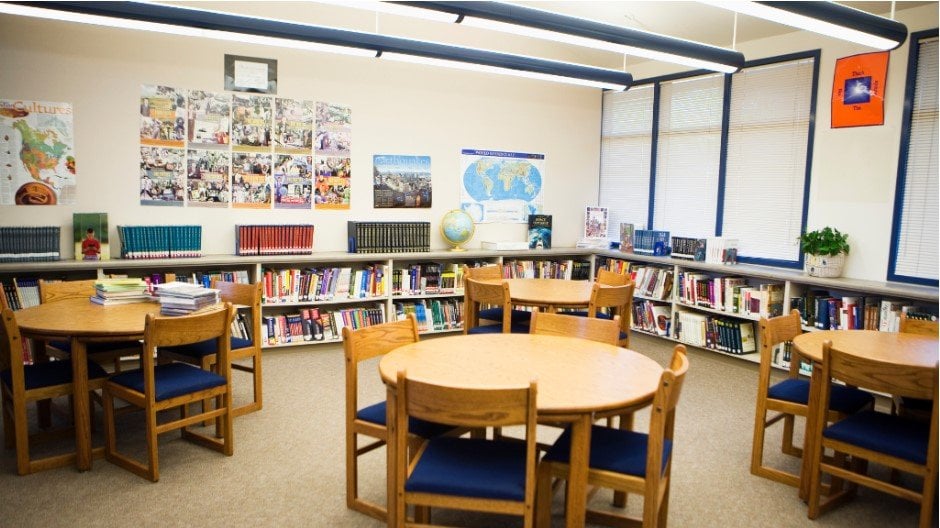
How important are informal learning spaces for learning success? Let’s explore their significance and the role they play in positive educational outcomes.
What are informal learning spaces?
Traditionally, learning took place formally in the classroom. Traditional learning environments, such as classrooms and lecture halls, are formal learning spaces that focus on a teacher-centred approach to learning. Teachers control learning, with students passively receiving the information.
But as it became clear that formal learning spaces were limited in their stimulation of students’ learning, a greater need for informal learning arose. As student-centred learning became more prominent, so too did the need for informal learning spaces.
Informal learning has no set structure or boundaries, leaving students open to developing their own learning experiences and interacting with peers to aid their learning success. Informal learning spaces are the spaces that help facilitate that learning, both in and beyond the classroom.
Examples of informal learning spaces include:
- Libraries
- Group study areas
- Individual study areas
- Common spaces/rooms
- Eating/dining areas
- Playground or outdoor play spaces
What are the benefits of informal learning spaces in students’ success?
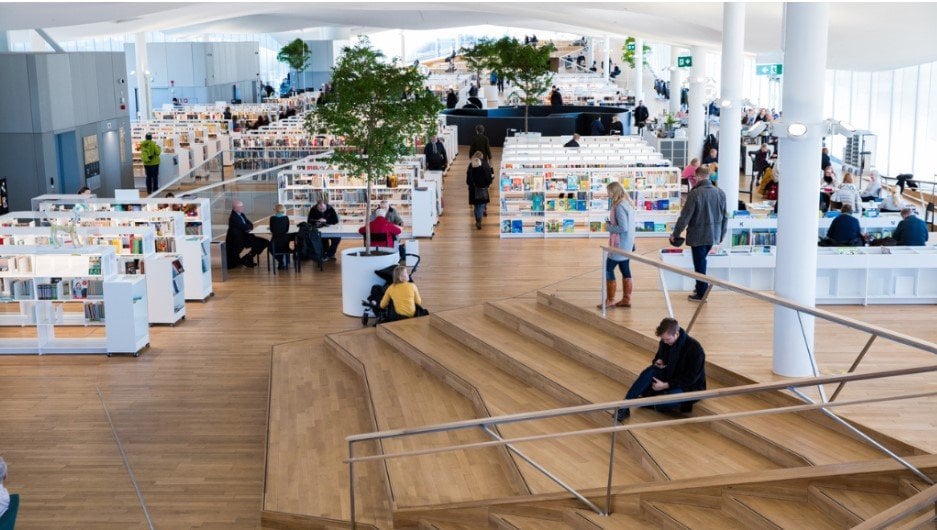
Informal learning spaces work best when learners can learn and discover at their discretion, level, and pace. Providing students with the flexibility to choose how they study can deliver many benefits which can enhance their learning success.
Students become more motivated
Giving the freedom and flexibility to study on their terms and in a space of their choosing can help motivate learners. Allowing students to learn at their own pace without the confines of a classroom gives students the time to engage on a deeper level with their learning.
Students can choose to study individually or with peers
Everyone learns differently. Some students prefer studying and engaging with their peers, while others prefer working individually. Informal learning spaces give students the choice of self-guided independent study or group study to suit the needs of each learner.
Students can spend time going over difficult subject areas
One of the biggest drawbacks to formal learning is the time restrictions placed on a lesson resulting in students not spending sufficient time on a topic area to fully understand it. Informal learning spaces can provide the freedom to understand complicated subject areas at the learner’s own pace.
Students can develop a range of skills
Students’ restrictions in formal learning spaces may not allow them to fully develop certain skills. Informal learning spaces can provide an environment to let students develop skills further, such as teamwork, critical analysis, and problem-solving.
Students have greater access to learning resources
A key component of informal learning spaces is the incorporation of technology. With students able to access technology so easily and freely, there is greater access to learning resources. Students able to access more learning material than in the classroom will help broaden and deepen learning.
Improves independence and fulfils learning goals
Just as everyone learns differently, every student will want to achieve or gain something different from their learning. Informal learning spaces allow students to direct their learning towards fulfilling learning goals. This can also help improve a learner’s independence.
How to create effective informal learning spaces
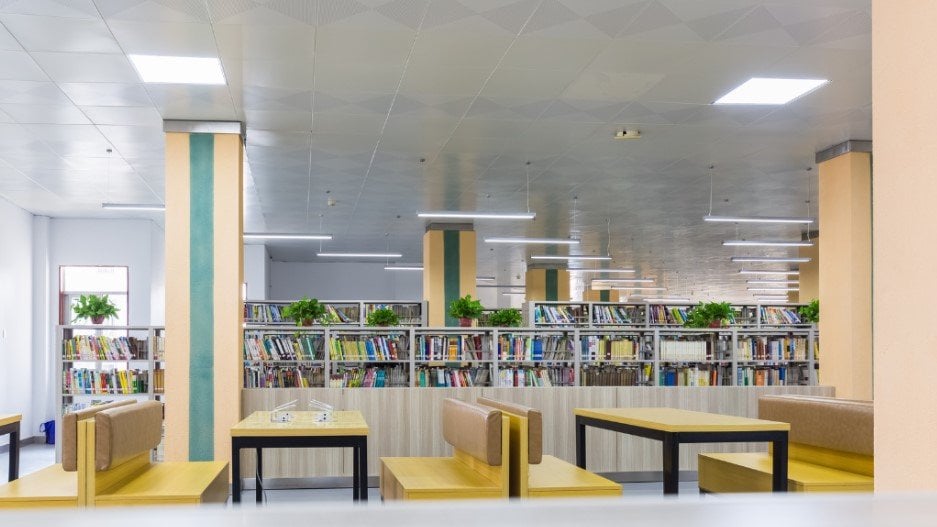
There are several features you can incorporate to create an effective informal learning space to enhance students’ learning.
Incorporate natural light
Research has shown that students learn better and are more motivated with their studies with natural light. Incorporating natural light makes a learning space much more aesthetically pleasing, and can reduce anxiety, boost health and wellbeing, and improve engagement.
Create a mixture of individual and group learning spaces
An informal learning space needs to be flexible, and this includes providing space for both individual and group learning. Provide quiet, individual spaces for those wanting to study individually, with collaborative learning spaces for group and peer learning.
Provide soft and comfortable furnishings
Students in informal learning spaces could be sitting for long periods. That’s why it is important to provide a range of comfortable seating options to help improve the effectiveness of the learning space. It also helps students feel more relaxed, which helps improve engagement and learning.
Create a sense of community
Whether students are learning individually or with peers, learning is a social process. For that reason, learning spaces must help fulfil and facilitate social connections. Connections in informal learning spaces can be both visual and verbal, to provide a sense of community.
Design based on usage and students’ needs
No learning space should be designed solely based on speculation or visual appeal. A key element in the success of a learning space is designing it according to the needs of students. The ambience, layout, visual design, and learning resources should all be based on the usage of the space and the needs of students.
Involving students in the planning of an informal learning space will ensure the space is tailored to their needs. Finding innovative and meaningful ways to involve students at each stage of development is a great way to ensure the space is optimised for learning success.
Make a space visually stimulating
Monotonous layouts with little in the way of colour and shapes can hinder learning. Instead, make informal spaces visually stimulating. Incorporate visual stimuli, complimentary colours and patterns, alongside interesting arrangements, to maximise the aesthetics and ambience.
Provide the space for students to mentally relax
Classrooms can be busy and noisy with a student-centred approach to teaching. It’s important to remember that students may also need time to relax and unwind from learning. Ensuring that there is a dedicated space that gives students the calm and quiet to mentally relax is essential. They can then return to learning with a clear mind.
Incorporate technology throughout
Technology is a crucial component of an informal learning space. Whether it’s providing internet connectivity or the IT equipment to facilitate research, no informal learning space is complete without tech. Incorporating technology into an informal learning space helps boost collaboration, alongside teamworking and problem-solving.
Gale – Gallery Teachers’ AI EFL Tutor
Explore how Gale – can help you to learn English. Gale is powered by OpenAI.